Capacity Building Peserta Didik dalam Melakukan Pencegahan Kekerasan melalui School based Prevention
DOI:
https://doi.org/10.64850/kareba.v1i1.20Keywords:
pencegahan, kekerasan, school based, duta anti-kekerasan, keterlibatan siswaAbstract
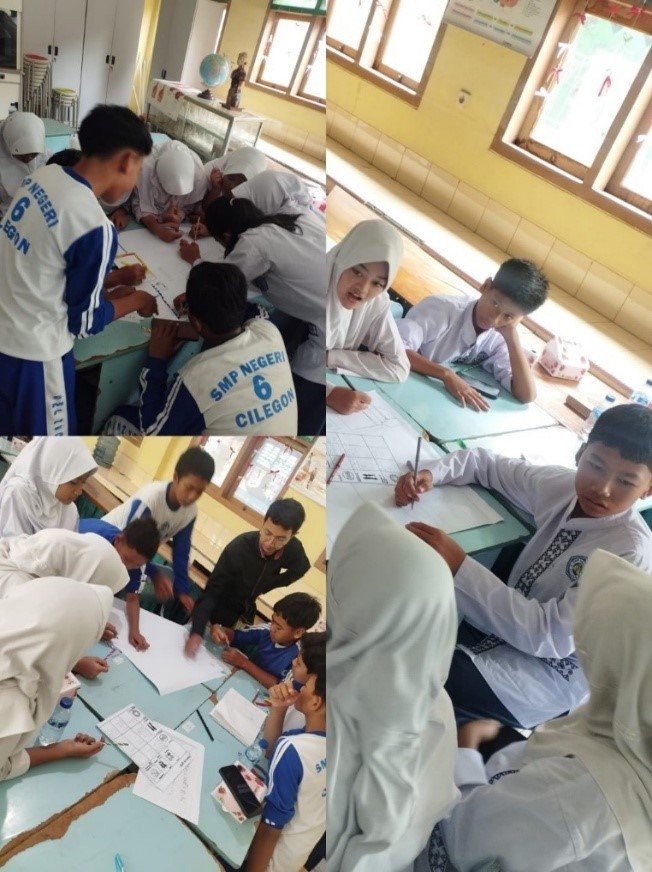
Pencegahan kekerasan di sekolah seringkali dilakukan secara reaktif dan agresif, sementara itu UNESCO menyarankan pendekatan yang lebih proaktif. Dengan melibatkan siswa secara aktif dalam proses pencegahan, diharapkan dapat membentuk karakter siswa yang mandiri dan bertanggung jawab atas lingkungan sekolah yang aman. Pengabdian kepada masyarakat ini ini dilakukan dengan tujuan untuk untuk mengembangkan kapasitas peserta didik dan membangun keterlibatan peserta didik dalam melakukan pencegahan kekerasan berbasis sekolah. Kegiatan dilakukan dengan metode Participatory Action Research (PAR) dengan tahapan KUPAR. Sasaran kegiatan adalah pengurus Osis dan duta anti kekerasan di SMP Negeri 6 Kota Cilegon. Kegiatan capacity building yang dilaksanakan berdampak kepada pengembanagn kemampuan siswa dalam mengidentifikasi, mencegah, dan mengatasi kekerasan di sekolah. Siswa telah menunjukkan pemahaman yang lebih baik tentang berbagai bentuk kekerasan, faktor penyebabnya, dan strategi pencegahannya. Selain itu, siswa juga telah mengembangkan keterampilan yang diperlukan untuk menjadi duta anti-kekerasan yang efektif, seperti komunikasi asertif, pengelolaan emosi, dan kemampuan problem-solving.
Downloads
References
Blake, S., & Dickinson, J. (2022). How to involve students in work on gender-based violence. In Stopping Gender-based Violence in Higher Education (pp. 323–335). Routledge. https://doi.org/10.4324/9781003252474-20
Dania, I. A. (2020). KEKERASAN SEKSUAL PADA ANAK. Ibnu Sina: Jurnal Kedokteran Dan Kesehatan - Fakultas Kedokteran Universitas Islam Sumatera Utara, 19(1), 46–52. https://doi.org/10.30743/ibnusina.v19i1.15
Habibuddin, H., Alwi, M., Sururuddin, M., Sahiruddin, S., Hadi, N., Sadaruddin, S., & Rodiyah, H. (2023). Kultur Sekolah dalam Pencegahan Bullying dan Kekerasan di Sekolah Dasar. Jurnal DIDIKA: Wahana Ilmiah Pendidikan Dasar, 9(2), 393–413. https://doi.org/10.29408/didika.v9i2.24916
Hashemi, F., Keshavarz Afshar, H., & Gholamali Lavasani, M. (2022). The Mediating Role of Cognitive Emotion Regulation Strategies in the Relationship between Domestic Violence, Attachment Styles and Women’s Psychological Well-Being. Journal of Counseling Research. https://doi.org/10.18502/qjcr.v21i83.11088
Herdianti, H., Martha, E., Kafit, M., Sembiring, F. Y., & Arnanda, R. (2024). Edukasi Anti Kekerasan Seksual dan Perundungan (Bullying) pada Siswa SMK X Kota Batam. PUAN INDONESIA, 6(1). https:/doi.org/10.37296/jpi.v6i1.252
Hernandez, E. J., & Elasmar, A. R. (2023). Preventing school violence through student engagement. In School-Based Family Counseling for Crisis and Disaster (pp. 196–211). Routledge. https://doi.org/10.4324/9781003201977-20
Kurniasari, A., Widodo, N., Husmiati, H., Susantyo, B., Wismayanti, Y. F., & Irmayani, N. R. (2017). PREVALENSI KEKERASAN TERHADAP ANAK LAKI-LAKI DAN ANAK PEREMPUAN DI INDONESIA. Sosio Konsepsia, 6(3). https://doi.org/10.33007/ska.v6i3.740
Lazarus, S., Khan, N., Johnson, B., & Seedat, M. (2012). Towards safer schools. In Crime, violence and injury in South Africa: Enabling child safety.
Prastini, E. (2024). Kekerasan Terhadap Anak dan Upaya Perlindungan Anak di Indonesia. Jurnal Citizenship Virtues, 4(2), 760–770. https://doi.org/10.37640/jcv.v4i2.2043
Purbarani, D. A., Boroallo, R. P., Rahmaeni M, A., & Bulalong, R. R. (2024). Edukasi Anti-Kekerasan Seksual di Sekolah Dasar: Membangun Lingkungan Sekolah Ramah Anak. Jurnal Abdimas Indonesia, 4(4), 1658–1667. https://doi.org/10.53769/jai.v4i4.1205
Ramadhanti, A. (2023). Studi Literatur : Penerapan Psikologi Positif Terhadap Bidang Pendidikan di Indonesia. Journal Evaluation in Education (JEE), 4(2), 62–67. https://doi.org/10.37251/jee.v4i2.309
Rizzo, A. J., Orr, N., Shaw, N., Farmer, C., Chollet, A., Young, H., Berry, V., Rigby, E., Hagell, A., Bonell, C., & Melendez-Torres, G. J. (2023). Exploring the Activities and Target Audiences of School-Based Violence Prevention Programs: Systematic Review and Intervention Component Analysis. Trauma, Violence, & Abuse, 24(5), 3593–3614. https://doi.org/10.1177/15248380221134294
Salau, T., Keo, G. D., Labre, B., & Fanggitasik, D. D. (2023). Pelatihan Asertif Bagi Remaja: Upaya Preventif Tindakan Kekerasan di Sekolah. Warta LPM, 453–461. https://doi.org/10.23917/warta.v26i4.2455
Selly, S., Wilson, W., & Jais, M. (2024). Pelaksanaan Kelas Edukasi Perkumpulan Keluarga Berencana Indonesia (PKBI) Riau Dalam Meningkatkan Kesadaran Terhadap Bullying bagi Remaja di Sekolah Kota Pekanbaru. Journal of Law, Education and Business, 2(2), 1483–1489. https://doi.org/10.57235/jleb.v2i2.3163
Sumarni, T., Sopiani, I. K., & Mufaro’ah. (2024). Pendampingan Terhadap Anak Korban Kekerasan Berbasis Gender Di Kabupaten Bengkalis. Jurnal Masyarakat Indonesia (Jumas), 4(01), 7–17. https://doi.org/10.54209/jumas.v4i01.131
Suryahadikusumah, A. R., & Yustiana, Y. R. (2016). Bimbingan Dan Konseling Komunitas Untuk Mendukung Positive Youth Development (Penelitian Tindakan Partisipatoris Bersama Komunitas Schoolzone). Jurnal Penelitian Pendidikan, 16(2), 137–146. https://doi.org/10.17509/jpp.v16i2.4235
Thakore, R., Apfeld, J., Johnson, R., Sathiyakumar, V., Jahangir, A., & Sethi, M. (2014). School-based violence prevention strategy: a pilot evaluation. Journal of Injury and Violence Research. https://doi.org/10.5249/jivr.v7i2.565
Thompkins, A. C., Chauveron, L. M., Harel, O., & Perkins, D. F. (2014). Optimizing Violence Prevention Programs: An Examination of Program Effectiveness Among Urban High School Students. Journal of School Health, 84(7), 435–443. https://doi.org/10.1111/josh.12171
Tutty, L. M., Bradshaw, C., Thurston, W. E., & Nixon, K. (2005). School based violence prevention programs: Preventing violence against children and Youth (Revised Ed.). ESOLVE (Research and Education for Solutions toViolence and Abuse).
Zohriah, A., Torismayanti, T., & Firdaos, R. (2023). Implementasi Strategi Manajemen Konflik untuk Mencegah Kekerasan di Sekolah. EduInovasi: Journal of Basic Educational Studies, 4(1), 24–44. https://doi.org/10.47467/edu.v4i1.435
Downloads
Published
Issue
Section
License
Copyright (c) 2025 Ahmad Rofi Suryahadikusumah, Monalisa Monalisa, Fauzan Nazil Ramadhan, Anisa Maharani (Author)

This work is licensed under a Creative Commons Attribution-ShareAlike 4.0 International License.
In submitting the manuscript to the journal, the authors certify that:
- They are authorized by their co-authors to enter into these arrangements.
- The work described has not been formally published before, except in the form of an abstract or as part of a published lecture, review, thesis, or overlay journal.
- That it is not under consideration for publication elsewhere,
- That its publication has been approved by all the author(s) and by the responsible authorities – tacitly or explicitly – of the institutes where the work has been carried out.
- They secure the right to reproduce any material that has already been published or copyrighted elsewhere.
- They agree to the following license and copyright agreement.
License and Copyright Agreement
Authors who publish with Kareba: Jurnal Pengabdian Masyarakat agree to the following terms:
- Authors retain copyright and grant the journal right of first publication with the work simultaneously licensed under Creative Commons Attribution License (CC BY-SA 4.0) that allows others to share the work with an acknowledgment of the work's authorship and initial publication in this journal.
- Authors can enter into separate, additional contractual arrangements for the non-exclusive distribution of the journal's published version of the work (e.g., post it to an institutional repository or publish it in a book), with an acknowledgment of its initial publication in this journal.
- Authors are permitted and encouraged to post their work online (e.g., in institutional repositories or on their website) before and during the submission process, as it can lead to productive exchanges, as well as earlier and greater citation of published work.